Learn Spanish by reading real books
Tap any word for an instant translation. Ask the AI about grammar. Build a Spanish vocabulary from books you actually want to read.
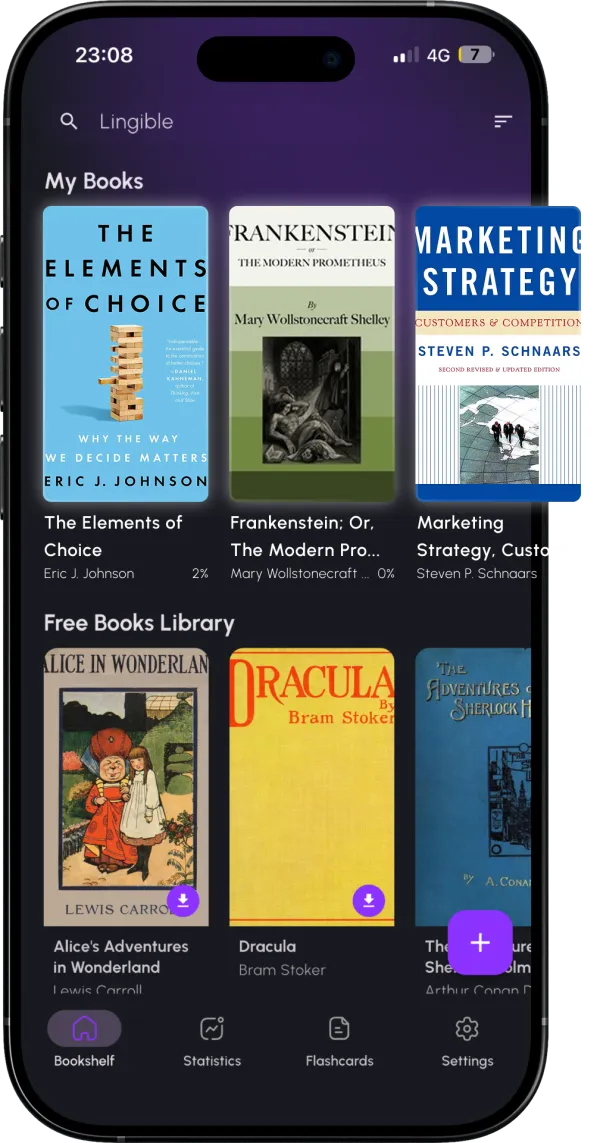
Tap any word for an instant translation. Ask the AI about grammar. Build a Spanish vocabulary from books you actually want to read.
Three steps to learning a language through reading
Browse 67,000+ free titles in 40+ languages or upload your own EPUB, PDF, MOBI, TXT, or FB2.
Tap any word for an instant translation with pronunciation and grammar. Ask the AI to explain a phrase or chapter.
Every word you save becomes a flashcard. Review on your schedule. Track mastery per book.
For English speakers, Spanish is one of the most accessible major languages. Phonetic spelling, heavy vocabulary overlap with English, and mostly intuitive grammar. Reading works well because you can usually guess meaning from context even before tapping for a translation.
Children's books or YA novels (El Principito in Spanish, short stories by Horacio Quiroga) — controlled vocabulary, simpler grammar. Move to modern novels once you can read 2-3 pages without tapping every word.
Yes. Translations account for both Peninsular (Spain) and Latin American Spanish, including regional vocabulary like 'vosotros' vs 'ustedes'. AI grammar explanations flag dialect-specific usage when relevant.