Learn Italian by reading real books
Tap any word. Instant translation. AI grammar help. Build an Italian vocabulary from real novels, novellas, and short stories.
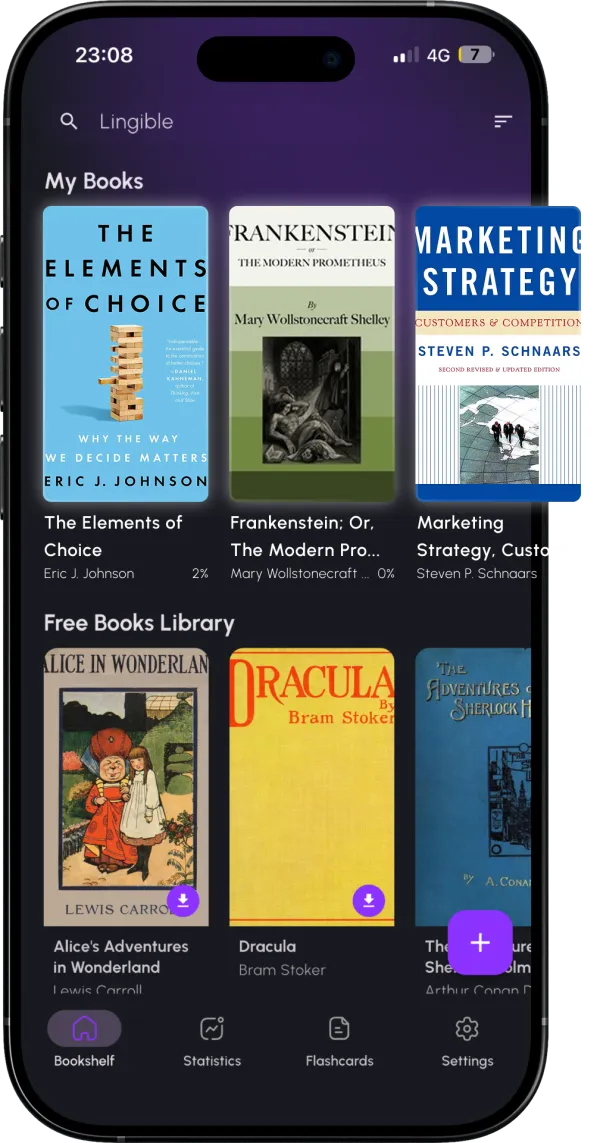
Tap any word. Instant translation. AI grammar help. Build an Italian vocabulary from real novels, novellas, and short stories.
Three steps to learning a language through reading
Browse 67,000+ free titles in 40+ languages or upload your own EPUB, PDF, MOBI, TXT, or FB2.
Tap any word for an instant translation with pronunciation and grammar. Ask the AI to explain a phrase or chapter.
Every word you save becomes a flashcard. Review on your schedule. Track mastery per book.
Very close — maybe 80% vocabulary overlap at the written level, though pronunciation diverges. If you already speak Spanish you can often read Italian with 60-70% comprehension before studying it formally. Reading widens that quickly.
Actually simpler in practice. Italian has <em>passato prossimo</em> (compound past, used in speech and modern writing) and <em>passato remoto</em> (historic past, used mostly in literary narration). Most modern novels use <em>passato prossimo</em> heavily, which works like English's 'have done'.
No. Standard Italian (based on Tuscan) is what's taught, written, and broadcast. Regional dialects exist but almost all literature and media uses standard Italian. Don't worry about dialects until you've already reached fluency.