Learn French by reading real books
Tap any word for an instant translation. Ask the AI to explain grammar. Build a French vocabulary from the books you actually want to read.
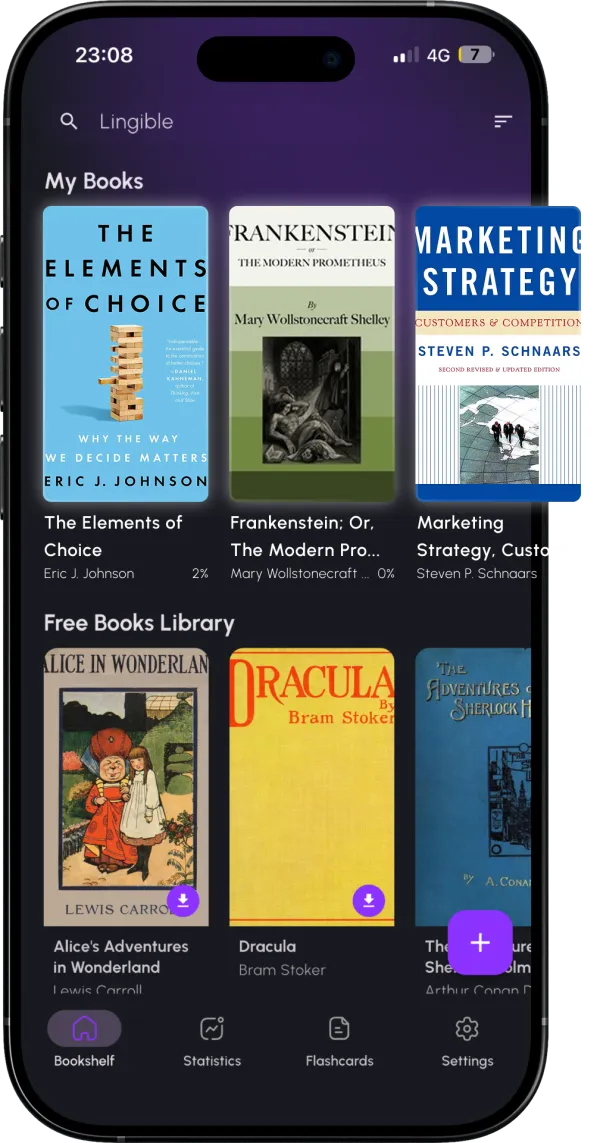
Tap any word for an instant translation. Ask the AI to explain grammar. Build a French vocabulary from the books you actually want to read.
Three steps to learning a language through reading
Browse 67,000+ free titles in 40+ languages or upload your own EPUB, PDF, MOBI, TXT, or FB2.
Tap any word for an instant translation with pronunciation and grammar. Ask the AI to explain a phrase or chapter.
Every word you save becomes a flashcard. Review on your schedule. Track mastery per book.


Yes — it's used constantly in real French, though less in casual speech. Reading teaches you when native writers use it naturally, which textbooks struggle to convey. Tap an unfamiliar conjugation and the AI explains whether it's subjunctive and why.
Reading is actually the best solution. You see each noun with its article hundreds of times in novels, and the pair starts to feel natural the way 'an apple' feels natural to English speakers. Flashcards include the article automatically.
Camus, Saint-Exupéry, and Simenon (detective novels) are famously approachable. Avoid Proust and Victor Hugo until advanced — their sentences are long and vocabulary wide. For modern writers try Amélie Nothomb or Muriel Barbery.