Learn Arabic by reading real books
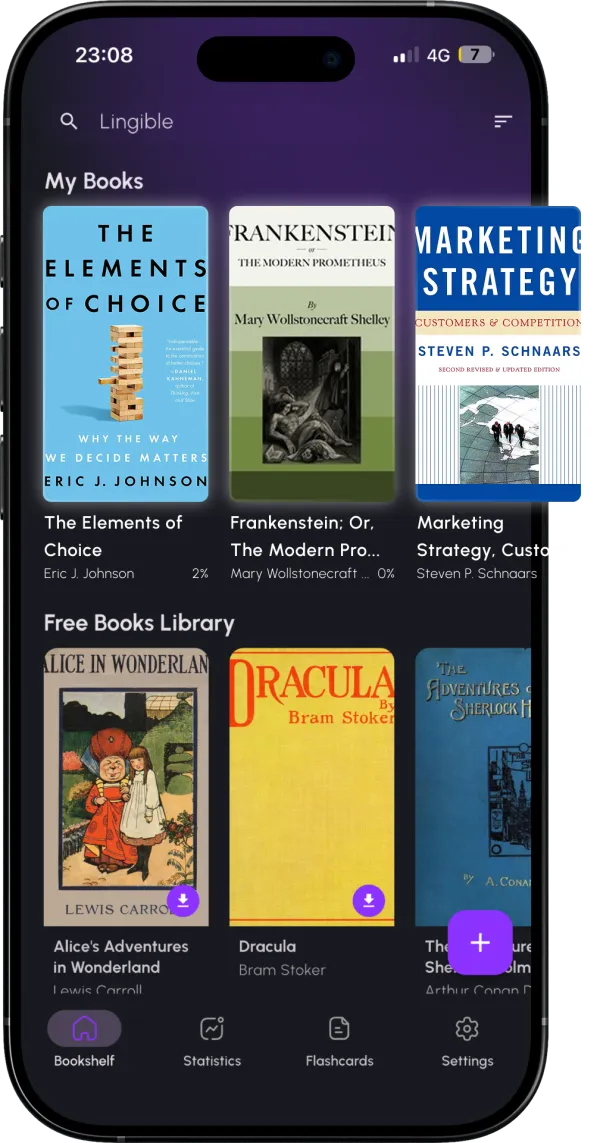
Tap any word for instant translation. AI explains the root system. Read Modern Standard Arabic and literary dialects. RTL display supported.
Tap any word for instant translation. AI explains the root system. Read Modern Standard Arabic and literary dialects. RTL display supported.
Three steps to learning a language through reading
Browse 67,000+ free titles in 40+ languages or upload your own EPUB, PDF, MOBI, TXT, or FB2.
Tap any word for an instant translation with pronunciation and grammar. Ask the AI to explain a phrase or chapter.
Every word you save becomes a flashcard. Review on your schedule. Track mastery per book.
MSA for reading and writing. Almost all books, news, and formal media are in MSA. Spoken Arabic varies by country (Egyptian, Levantine, Gulf, Moroccan), and you pick up a dialect when you need to converse with people. For a reading-first path, MSA is the right target.
Yes. Full RTL rendering with proper text direction, mixed LTR/RTL layout for names and numbers, and tap targets that work naturally for both directions. Arabic typography is treated as a first-class citizen, not a retrofit.
Yes, and it's faster than it looks. The Arabic alphabet has 28 letters with 2-4 forms each (initial, medial, final, isolated). Most learners can decode in 2-3 weeks of focused practice. Once you can decode, Lingible handles the rest — tap any unfamiliar word for instant meaning and transliteration.