Learn Russian by reading real books
Tap any word for instant translation. AI explains the 6 cases. Build a Russian vocabulary from Tolstoy, Dostoevsky, and modern novels.
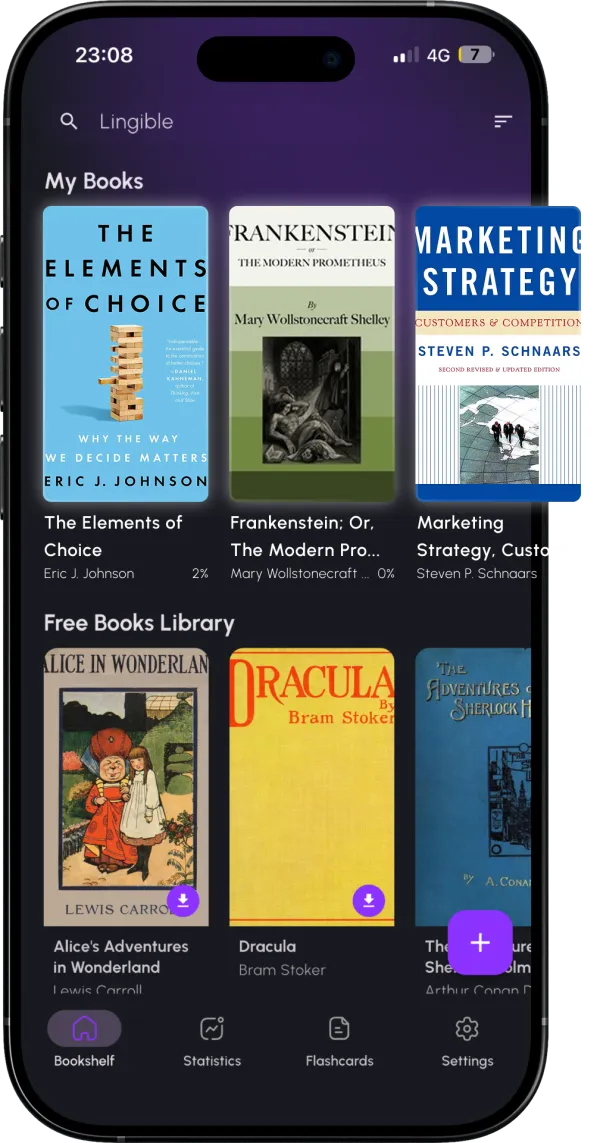
Tap any word for instant translation. AI explains the 6 cases. Build a Russian vocabulary from Tolstoy, Dostoevsky, and modern novels.
Three steps to learning a language through reading
Browse 67,000+ free titles in 40+ languages or upload your own EPUB, PDF, MOBI, TXT, or FB2.
Tap any word for an instant translation with pronunciation and grammar. Ask the AI to explain a phrase or chapter.
Every word you save becomes a flashcard. Review on your schedule. Track mastery per book.
Surprisingly easy. About a third of the letters look and sound like Latin (А, Е, К, М, О, Т), another third look different but sound like something familiar once learned (Р=R, С=S, Н=N), and the rest are new. Most learners can decode Cyrillic after a few focused hours. Understanding the words is the real work.
They're a real challenge but over-hyped in horror-story form. Reading exposes you to each case hundreds of times per novel in natural context. After a few books, the endings become predictable. Tap any noun and Lingible tells you which case it's in and why.
Yes, though not as a first book. Most intermediate learners (B2) can read Tolstoy with patience and heavy tap-to-translate help. His sentences are long and his vocabulary huge, but the grammar is relatively clean. Start with Chekhov or Bulgakov, then build up to Anna Karenina.