Learn Korean by reading real books
Tap any word for instant translation. AI explains honorifics and grammar. Read webtoons, novels, and Korean fiction without stopping to look words up.
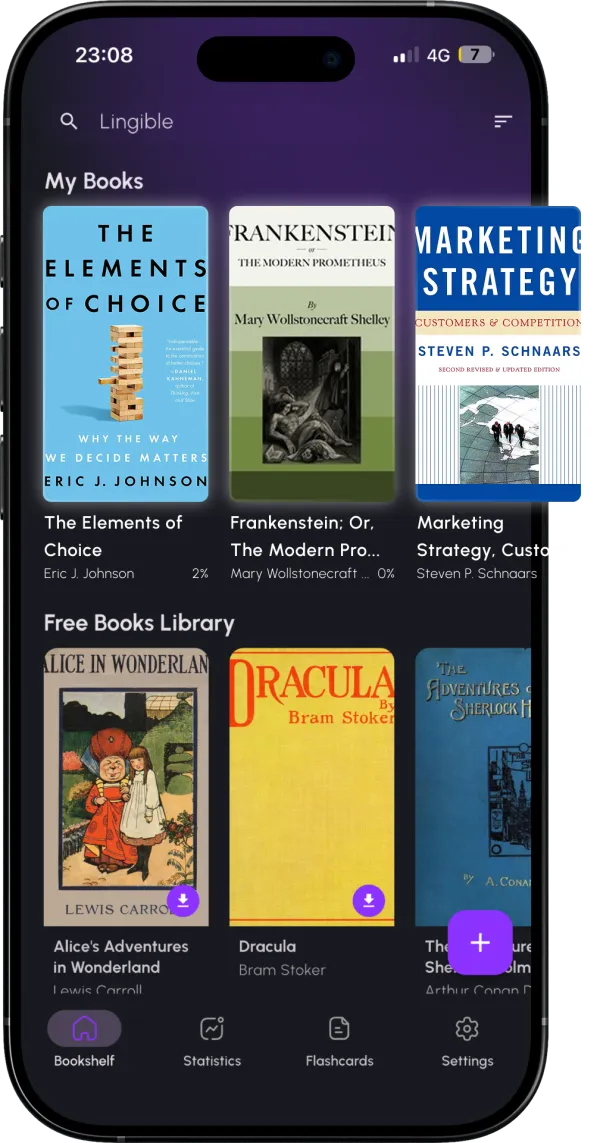
Tap any word for instant translation. AI explains honorifics and grammar. Read webtoons, novels, and Korean fiction without stopping to look words up.
Three steps to learning a language through reading
Browse 67,000+ free titles in 40+ languages or upload your own EPUB, PDF, MOBI, TXT, or FB2.
Tap any word for an instant translation with pronunciation and grammar. Ask the AI to explain a phrase or chapter.
Every word you save becomes a flashcard. Review on your schedule. Track mastery per book.
Yes — it was designed in the 15th century to be easy. Most learners can decode Hangul (read aloud, not yet understand) after 2-4 focused hours. Understanding the words you're reading obviously takes longer, but the alphabet itself is the quickest writing system of any major language to learn.
Yes — novels use them as a signal of relationships between characters. Formal speech (존댓말) between new acquaintances, casual (반말) between friends, intimate forms in families. Tap any verb ending and Lingible tells you the register level. This is something textbooks struggle to teach because it's hard to show in isolated examples.
Webtoons win. Dialogue is contemporary and conversational, panels give you context, and slice-of-life webtoons use vocabulary you'll actually use. After 20-30 webtoons you'll be ready for light novels, then literary fiction.