Learn Japanese by reading real books
Tap any word, kanji, or compound for instant translation. AI explains grammar. Furigana support built in. Read manga and novels without stopping to look things up.
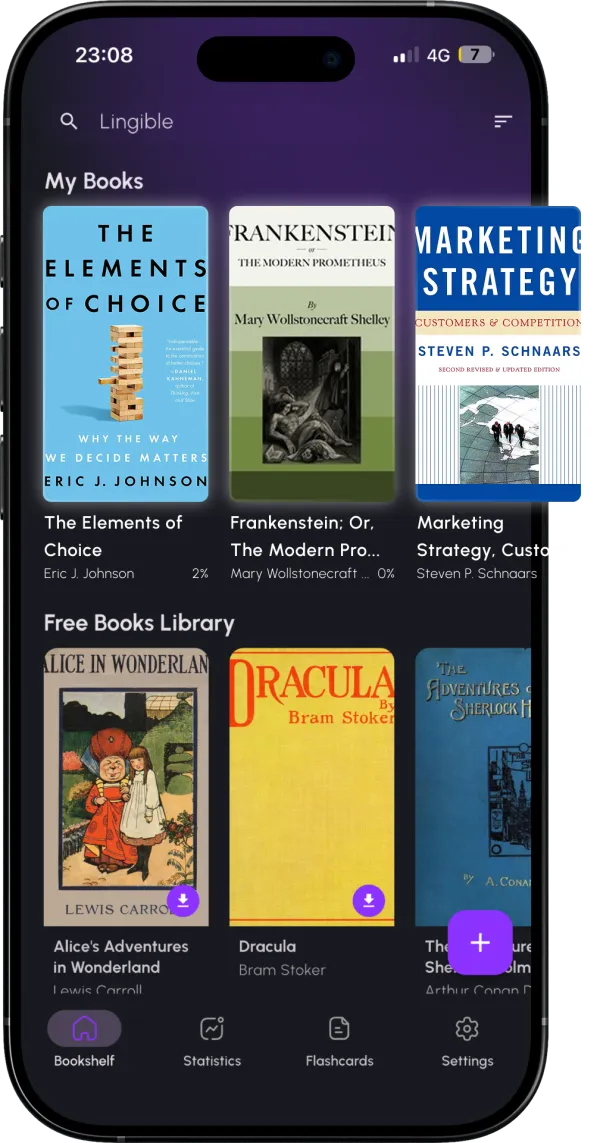
Tap any word, kanji, or compound for instant translation. AI explains grammar. Furigana support built in. Read manga and novels without stopping to look things up.
Three steps to learning a language through reading
Browse 67,000+ free titles in 40+ languages or upload your own EPUB, PDF, MOBI, TXT, or FB2.
Tap any word for an instant translation with pronunciation and grammar. Ask the AI to explain a phrase or chapter.
Every word you save becomes a flashcard. Review on your schedule. Track mastery per book.
No — that's the usual bottleneck, and Lingible removes it. Tap any kanji for the reading (furigana) and meaning. You'll naturally learn the 500-1,000 most common kanji just from encountering them in books repeatedly. Formal kanji study can then focus on the ones that aren't sinking in.
Yes. Furigana (kana pronunciation above kanji) is available on tap. For children's books and many YA titles in the library, furigana is already inline in the text. For adult novels, tap-to-reveal on demand.
Manga. The visuals give you context for what's happening, the dialogue is natural and conversational, and shōnen and slice-of-life titles use simple sentence structures. After a few volumes, light novels (written for younger adults) are the natural next step before harder adult fiction.