Learn Dutch by reading real books
Tap any word for instant translation. AI explains the grammar. Build a Dutch vocabulary from Dutch and Flemish novels.
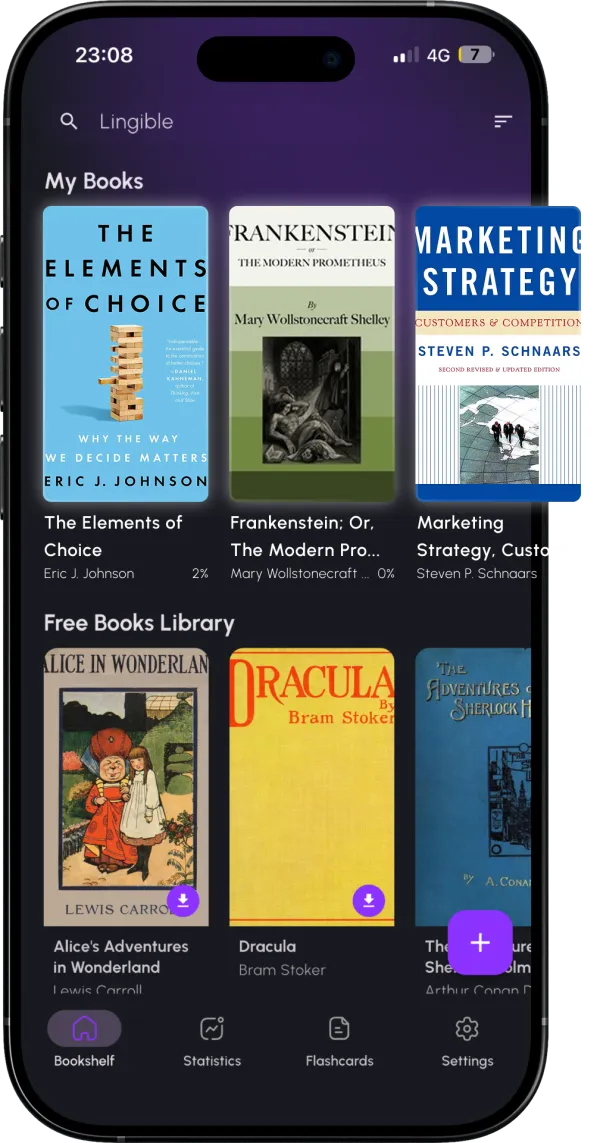
Tap any word for instant translation. AI explains the grammar. Build a Dutch vocabulary from Dutch and Flemish novels.
Three steps to learning a language through reading
Browse 67,000+ free titles in 40+ languages or upload your own EPUB, PDF, MOBI, TXT, or FB2.
Tap any word for an instant translation with pronunciation and grammar. Ask the AI to explain a phrase or chapter.
Every word you save becomes a flashcard. Review on your schedule. Track mastery per book.
Passive reading, not really — you'll understand 70-80% of written Dutch from German alone. But active fluency (speaking, writing) requires focused study because the vocabulary often diverges in unexpected places and pronunciation is quite different. For reading-only goals, start with Dutch novels and tap words as needed.
Pronunciation, particularly the <em>g</em> / <em>ch</em> sound and the <em>ui</em> diphthong. But pronunciation matters less for reading than for speaking, and written Dutch is extremely accessible to English speakers. Word order in subordinate clauses is the main grammatical gotcha — it moves the verb to the end, like German.
<em>Het diner</em> by Herman Koch is a tight contemporary thriller with accessible prose. <em>De aanslag</em> by Harry Mulisch is a classic of modern Dutch literature. For short stories try Simon Carmiggelt. Any of these works well as a first real reading project after basic grammar.